
3D Printing or CNC? What You Should Choose for Your Next Part
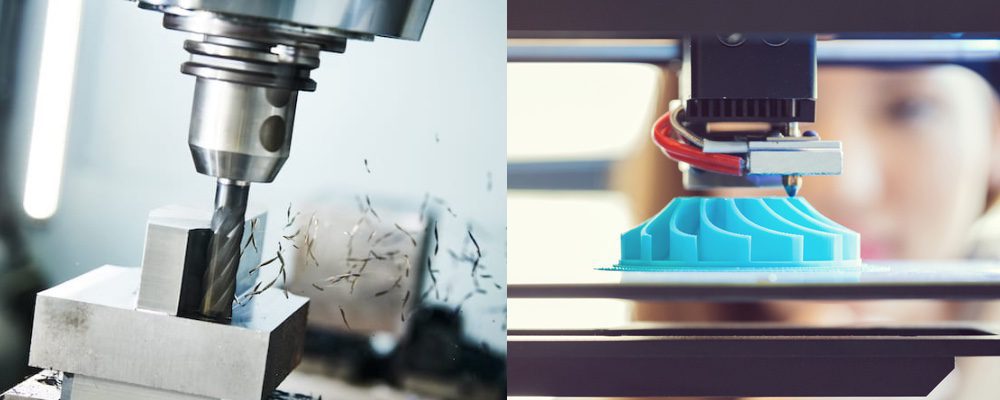
When developing a new component, engineers and manufacturers often face a key decision: should the part be produced using CNC machining or 3D printing?
Both technologies are widely used in modern manufacturing, and each offers distinct advantages. CNC machining has long been trusted for its precision and durability, while additive manufacturing enables faster development cycles and greater design flexibility.
Understanding the differences between these manufacturing methods can help companies choose the most efficient approach for their next part while reducing lead times and production costs.
Understanding CNC Machining
CNC (Computer Numerical Control) machining is a subtractive manufacturing process where cutting tools remove material from a solid block to form the final component. This process is commonly used for producing metal and plastic parts that require high precision and structural strength.
Because the process relies on computer-controlled machines, CNC machining can achieve extremely tight tolerances and consistent quality. It is widely used in industries such as aerospace, automotive, electronics, and industrial equipment manufacturing.
Another key advantage of CNC machining is its compatibility with a broad range of materials. Metals such as aluminium, stainless steel, and titanium can all be machined efficiently, making the process ideal for parts that must withstand mechanical loads or demanding environments.
However, CNC machining may require longer setup times, particularly for complex components that need multiple machining operations. During early product development, these setup requirements can extend lead times and increase production costs.
Understanding 3D Printing
3D printing, also known as additive manufacturing, produces parts by building them layer by layer from a digital design file. Instead of removing material like CNC machining, additive manufacturing deposits material only where it is needed.
This approach enables engineers to create complex geometries, internal channels, and lightweight structures that would be difficult or impossible to produce using traditional manufacturing methods.
Industrial additive manufacturing solutions from companies such as Stratasys allow manufacturers to produce functional prototypes, tooling, and end-use parts using advanced polymer materials.
One of the main advantages of 3D printing is its ability to accelerate product development. Because no tooling is required, parts can often be produced directly from a digital model within hours or days. This makes additive manufacturing particularly valuable for rapid prototyping and design validation.
| Factor | CNC Machining | 3D Printing |
|---|---|---|
| Manufacturing Method | Subtractive (material removal) | Additive (layer-by-layer build) |
| Design Complexity | Limited by cutting tools | Complex geometries possible |
| Lead Time | Requires machine setup and tooling | Parts produced directly from digital files |
| Material Options | Metals and engineering plastics | Primarily advanced polymers |
| Production Volume | Best for medium to high volumes | Ideal for low-volume or customised parts |
These differences mean that each process is suited to different manufacturing scenarios.
When to Use 3D Printing
Additive manufacturing is particularly beneficial when speed, flexibility, and design complexity are important. During the early stages of product development, engineers often need to test multiple design iterations before finalising a component.
3D printing enables teams to quickly produce prototypes, evaluate performance, and refine designs without the delays associated with traditional tooling. The technology is also well suited for producing customised parts, lightweight structures, and low-volume components where conventional manufacturing may be too costly.
With industrial additive manufacturing technologies from Stratasys, manufacturers can shorten development cycles and bring new products to market faster.
When CNC Machining Is the Better Choice
Despite the growing adoption of additive manufacturing, CNC machining remains essential for many production applications. Parts that require metal materials, extremely tight tolerances, or superior surface finishes are often better suited for machining.
CNC machining is also more cost-effective for medium to high production volumes, where the same machining program can be used repeatedly to produce identical components.
For applications involving structural parts, high mechanical loads, or strict quality requirements, CNC machining continues to provide reliable and consistent results.
Choosing the Right Manufacturing Method
Rather than replacing CNC machining, additive manufacturing is increasingly used alongside traditional manufacturing processes. Many companies adopt a hybrid approach in which 3D printing supports rapid prototyping and early design stages, while CNC machining is used to produce final production components.
By understanding the strengths of both technologies, manufacturers can select the most appropriate process for their application and optimise their production workflows.
As industrial 3D printing continues to advance, the combination of additive manufacturing and traditional machining will play an increasingly important role in modern digital manufacturing environments.
Looking to accelerate your product development with additive manufacturing?
Industrial 3D printing solutions help manufacturers reduce lead times, optimise prototyping, and produce functional parts faster.
Contact our team to learn how 3D printing can support your next manufacturing project.
Recent Comments